On-device · No account · No cloud

Two minutes, before the day pulls you in.

A two-minute spoken morning reflection, entirely on your iPhone — a few good questions, answered out loud, and never interpreted back.

A gentle morning reflection that lives entirely on your iPhone. No accounts, no cloud, no analysis. Just you, a little light, and the day ahead.

Now in open beta on TestFlight. Built to work in airplane mode.

Why it exists

Reflection helps. The habit is fragile.

A clear morning makes you decide better and show up better — as a partner, a parent, a friend. But a blank page is too much friction at 7am, and most apps either over-ask or immediately start interpreting you back, turning reflection into a performance review.

Before the Day takes the opposite bet: ask a few good questions, let you answer by speaking, and then get out of the way. It is quietly smart about how you engage — which questions land, which you keep walking past — and it adapts. But it draws all of that from your behavior, never from interpreting the content of what you say.

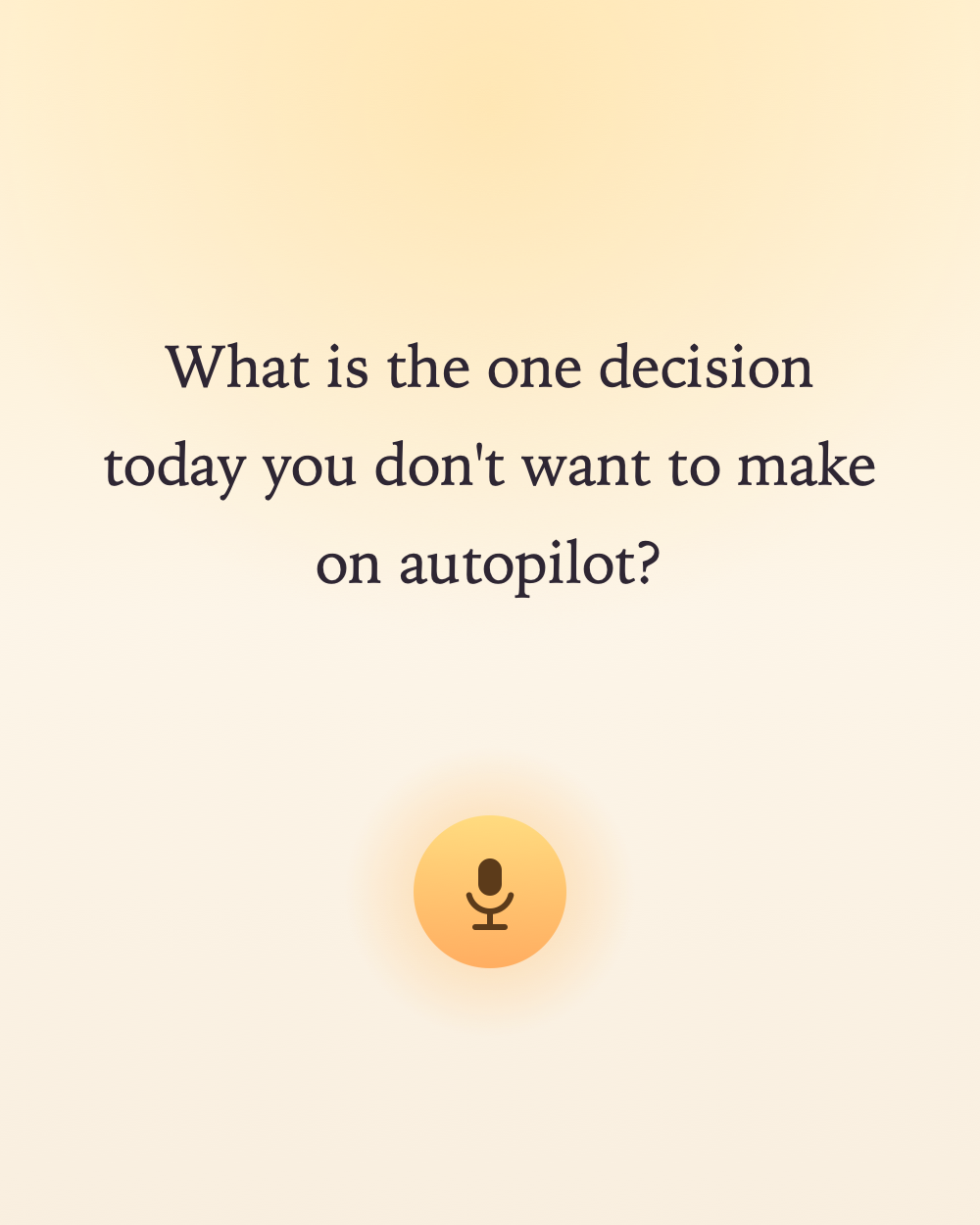
“What is the one decision today you don't want to make on autopilot?”

“Who will you see today — and how do you want them to feel afterward?”

“What's sitting heavy that you haven't named yet?”

The core experience

Open it. Speak. Close it. Under two minutes.

No forms, no typing, no end-of-session report. One question at a time, in a considered serif, in the soft light of dawn.

  1. 1

    One question appears

    Open the app — or tap the reminder, which is the first question. It shows one question at a time, never a wall of them.

  2. 2

    You answer out loud

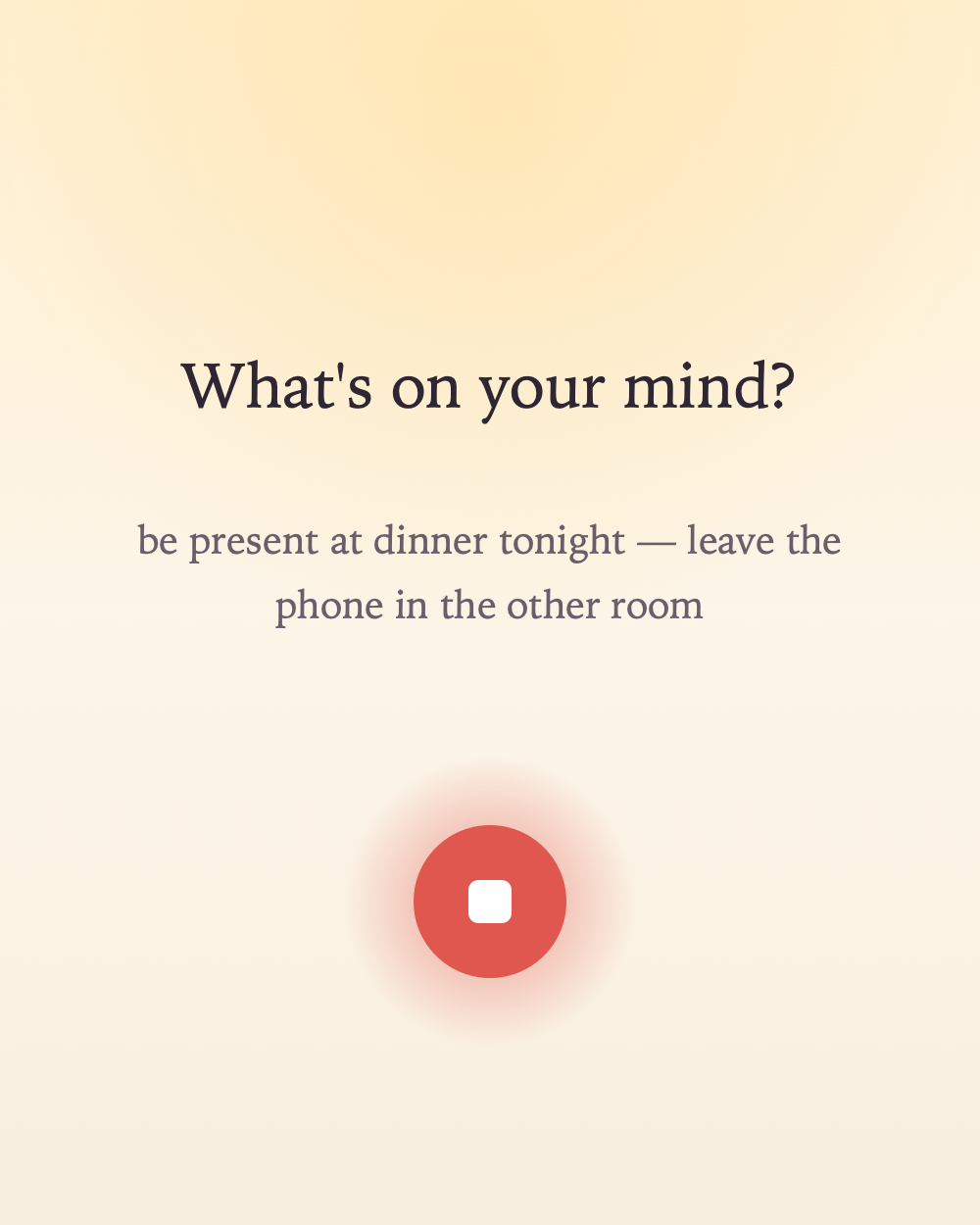
    Tap to start, speak, tap to stop. Your words are transcribed on the device as you talk. A long silence stops it for you.

  3. 3

    Your words settle

    The transcript settles on screen — your own words, confirming you were heard. Then the next question, chosen from what you just said, fades in.

  4. 4

    It closes quietly

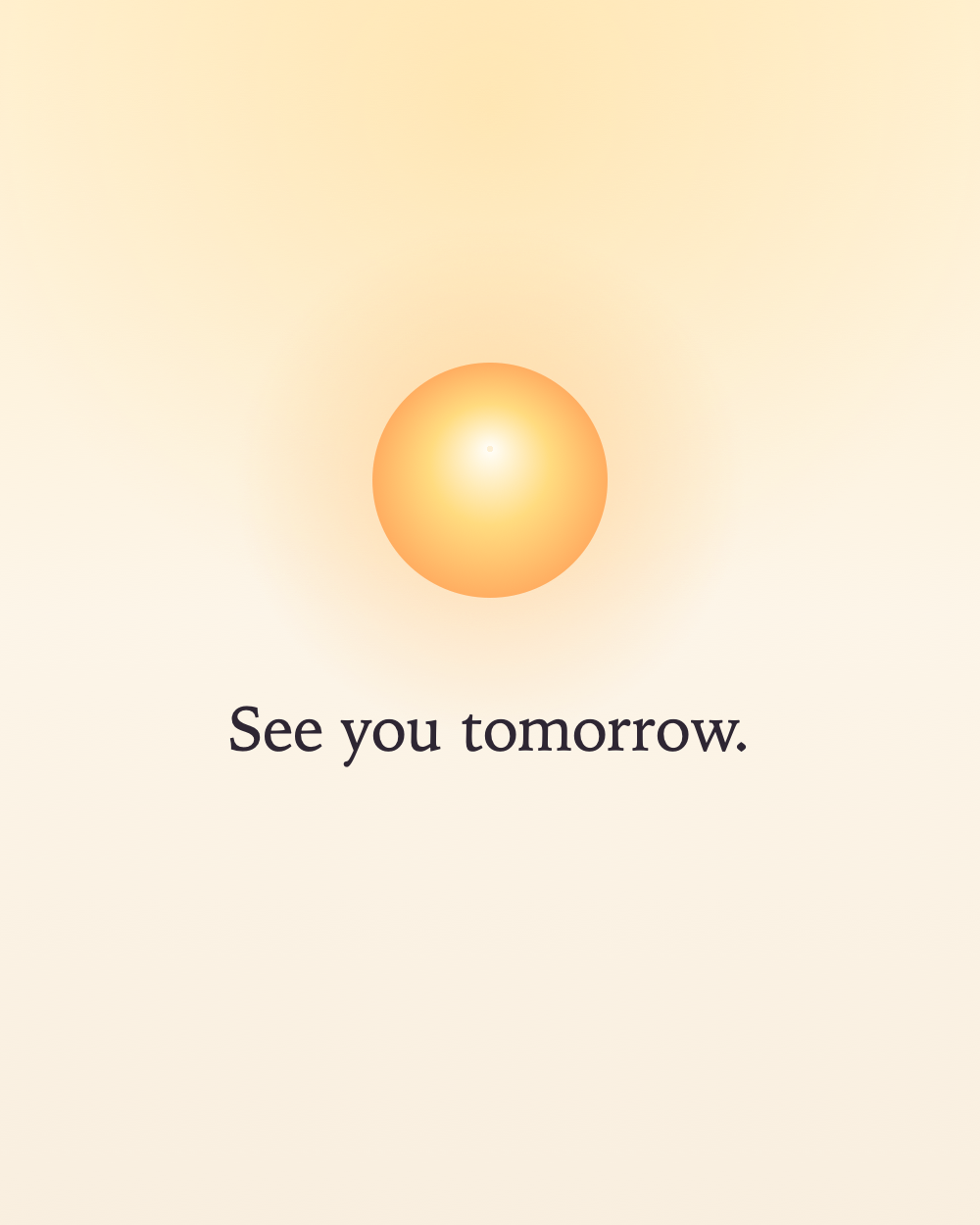
    Three questions, then done. The entry saves locally. No summary, no score, no recap. The day is the point.

A look inside

A quiet sunrise, one question at a time.

Adapt to behavior. Never interpret content.

It can notice that you keep walking past a question. It can never tell you what your words mean.

The app reads your answers for one purpose only: to choose the next good question. It will never read your entries back, summarize them, detect your mood, or surface “you keep mentioning…” patterns. There are no trends, no word clouds, no streak calendars. If a feature would require the app to say something about the substance of what you said, it's out.

Grounded in research

Why a small spoken ritual does real work

Before the Day is a personal tool, not a clinical intervention. But each design choice leans on a well-studied idea from psychology.

Saying it out loud calms the brain

Naming an experience in words — “affect labeling” — measurably reduces activity in the amygdala, the brain's threat center, and engages regions tied to regulation. Speaking, not just thinking, is doing something.

Lieberman et al. (2007), Psychological Science. Putting Feelings Into Words

Brief reflective writing improves wellbeing

Decades of expressive-writing studies, beginning with Pennebaker, link a few minutes of putting thoughts into words to better mood, lower stress, and improved health — from short, repeated sessions.

Baikie & Wilhelm (2005), Advances in Psychiatric Treatment. Emotional & physical health benefits of expressive writing

A question creates distance — and insight

Reflecting from a small step back (“self-distancing”) leads to insight and closure instead of rumination. A good question opens that distance; being interpreted at you slams it shut. That's why the app asks and never analyzes.

Kross & Ayduk (2011), Current Directions in Psychological Science. Making Meaning by Self-Distancing

Deciding in advance changes the day

Naming when, where and how you'll act — an “implementation intention” — reliably improves follow-through, with a medium-to-large effect across 94 studies. The morning's first question is exactly this: the decision you won't make on autopilot.

Gollwitzer & Sheeran (2006), Advances in Experimental Social Psychology (d ≈ .65). Implementation Intentions & Goal Achievement

These studies describe reflection, writing, and intention-setting in general — not this app. Before the Day translates their findings into a daily practice; it makes no medical or therapeutic claims.

What's inside

Designed around restraint

Voice-first, on device

Answer by speaking. Transcription runs on the Neural Engine — your voice is turned to text on the phone and the audio is discarded.

Questions that become yours

It learns which questions land and which you skip, and adapts — drawing on your behavior, never on the meaning of your answers.

Capture a daytime thought

A fleeting thought during the day becomes fuel for tomorrow's reflection — viewable for two weeks, then gently gone. Fuel, not an archive.

Your data is plain files

Every entry is a plain text file you own. Export is one step — it's already just a folder. Nothing is locked in a proprietary cloud.

No streaks, no pressure

A missed day is not a broken chain. No gamification, no guilt-tripping notifications — just one optional, gentle morning reminder.

No server to leak

There is no account and no backend. Privacy stops being a promise and becomes a property: the most sensitive data you own never leaves your hand.

Privacy

On-device is a property, not a promise

Your inner life is the most sensitive data you own. So none of it is uploaded — there is no server that could be breached, subpoenaed, or sold. Voice becomes text on the phone; the audio is thrown away. The app's small memory of you is visible and wipeable in Settings. Everything works in airplane mode.

Questions

Frequently asked

Does my reflection ever leave my phone?

No. Voice transcription, question generation, and the app's memory all run on your device. There's no server to leak, and it works fully offline.

Will it analyze or interpret what I say?

Never. It reads your answers only to choose the next question. It will not tell you what your words mean, detect mood, or surface content patterns. It speaks about behavior, never substance.

How long does it take?

Under two minutes. Three questions, answered by speaking — then it closes out quietly, with no summary screen and no score.

Is it a journal I can keep forever?

Your morning entries are plain files you own and can search. Daytime thoughts are deliberately ephemeral — they fade after about two weeks. The record is fuel, not an archive.

Do I need an account or a subscription?

No account, no login, no cloud. Your data is a folder of files on your phone that you can export at any time.

A personal note

The most important relationship I have is the one with myself — and it's the one I kept neglecting. Not for lack of caring, but because mornings move fast, and a blank page at 7am asks too much.

We invest in our health, our work, the people we love. The investment we keep skipping is the few quiet minutes of attention turned inward — meeting yourself before the day decides who you'll be. It's small, it's daily, it's easy to postpone forever — and, like anything, it compounds.

So I built the smallest thing that would hold me to it: a few good questions, answered out loud, on a device that never sends a word anywhere. It won't analyze you or keep score. It just gives you a moment to reconnect with yourself — then gets out of the way so you can go live the day.

It's early — that's why it's in beta. If it helps you make that investment on even the hard mornings, it's done its job.

Begin before the day begins.

It's in open beta on iPhone — free, on-device, no account. Join through TestFlight.

New to TestFlight? Install Apple's free TestFlight app first: Get TestFlight →